A Seat for Stan: The Plaques, Petty Rows and Peculiar Poetry of Britain’s Memorial Benches
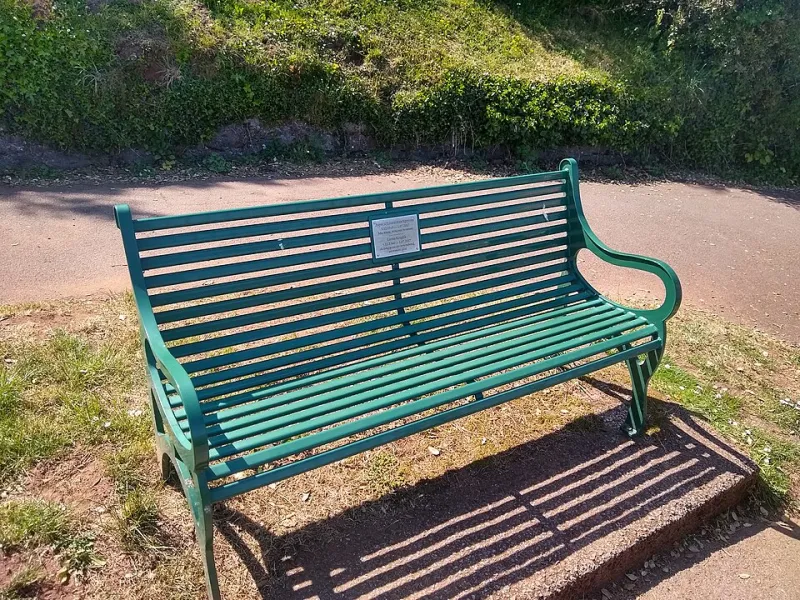
Photo: Andrej Shadura, CC BY-SA 4.0, via Wikimedia Commons
There is a bench on a promenade that I think about more than I should. It faces the sea, catches the worst of the wind and bears a small brass plaque: ‘In loving memory of Arthur, who sat here every day and complained about the seagulls. He was usually right.’ I never met Arthur. I have nevertheless sat on his bench, eaten a sausage roll and felt vaguely that I should have brought a flask.
Britain is covered in benches like this. They are one of our quietest obsessions: public furniture turned private memory, bolted to a view and polished by strangers. You can memorialise a person with a tree, a stone or a donation to a charity nobody can pronounce. But a bench has a particular magic. It is useful. It is social. It comes with somewhere to put your bum.
The Cheapest Way to Become Part of the Furniture
A memorial bench is grief with a practical edge. Councils and parks departments often run schemes where you pay for a plaque, a seat or both, sometimes with a maintenance fee and a time limit. The rules vary wildly. Some places are strict about wording and plaque size. Some have waiting lists. Some quietly remove unauthorised tributes after a decent interval, which is a polite way of saying the council has a bin bag and a schedule.
But the appeal is obvious. A tree grows. A bench waits. It says: this person liked this spot, and now you can like it too. It turns a view into a conversation. It gives a family somewhere to go on a birthday. And it lets a perfectly ordinary life — a dog walker, a bus-stop philosopher, a man who knew which chip shop had the right vinegar — become part of the local furniture.
A Field Guide to the Memorial Bench
After years of shameless bench-reading, I have come to recognise the types.
The View Bench. Usually on a seafront or hillside, plaque facing the panorama. The inscription is often something like ‘For Margaret, who loved this view and hated the wind.’ You can feel the family argument in the wording.
The Dog Bench. ‘For Bess, who never mastered sitting but loved a good sniff.’ Sometimes there is a little hook for a lead, sometimes a painted stone, sometimes a photograph in a plastic wallet that has gone the colour of weak tea.
The Chip Shop Bench. ‘In memory of Jim, who said the vinegar was better here.’ These are the most honest inscriptions in Britain. They do not pretend life is a poem. They simply record a man’s considered opinion about condiments.
The Family Business Bench. ‘For Mum, from all of us.’ Then, in smaller letters, ‘Except Elaine.’ You do not need to know the story. You can feel it.
The Improvised Shrine. Flowers taped to the armrest, a wind chime, a small bottle of something, a laminated poem, a QR code that leads to a playlist. This is a bench that has been promoted from memorial to place of pilgrimage.
The Quiet Wars Over Who Gets to Sit
Here is the awkward truth about memorial benches: they are public property with private grief bolted to them. The plaque says ‘enjoy this seat’. The family sometimes means ‘enjoy it respectfully, and preferably not in a way that involves a takeaway.’
There are etiquette rules, though nobody writes them down. Do not put your feet on the plaque. Do not scrape the inscription with a pushchair. Do not treat the bench as a bin. And if someone is sitting there looking teary, perhaps do not ask them to shuffle up so you can eat a pasty.
Then there are the family rows. Siblings disagree over the wording. A bench gets moved during a seafront refurbishment and the plaque goes missing. Someone adds a second plaque without permission. A council writes a letter about ‘unauthorised tributes’. The bench becomes a small stage for old arguments, performed in public and overlooked by a bronze-coloured seagull.
And there is the strange possessiveness of the bereaved. A family may visit a bench for years and find a stranger sitting on it, drinking a coffee and reading a paper. The stranger has every right to be there. The family knows this. It still feels wrong. That is because a memorial bench is not just a seat. It is a doorway, and someone has left it open.
Why We Memorialise a View, a Dog and a Chip Shop
We do it because benches are where ordinary life happens. Not the big speeches, but the pauses. The sit-down after a walk. The chips eaten in the car. The fag break. The proposal nobody saw. The dog that would not stop barking at the waves. A bench remembers the bit between the events.
That is why the inscriptions can be funny, odd or unexpectedly moving. ‘He liked to watch the ferries.’ ‘She said the seagulls were getting bigger.’ ‘No swearing, please.’ They are not grand. They are specific. And specificity is what makes grief bearable and shareable.
So the next time you see a plaque on a bench, read it. Sit for a minute if there is room. You do not need to know Stan, or Margaret, or the man who had strong views about vinegar. You just need to be part of the view they loved. And if you hear someone muttering about the seagulls, shuffle over. There is room.