Jars of Moles and a Roman Birthday Invite: Britain's Oddest Museum Cabinets
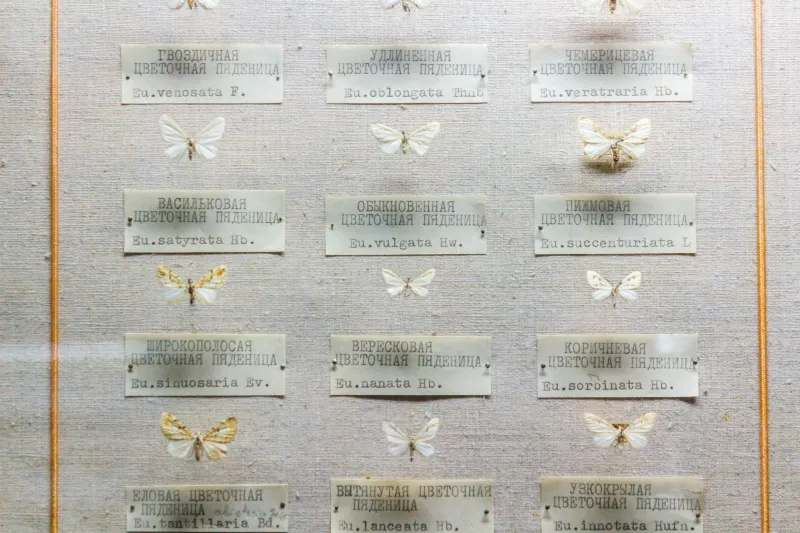
There is a particular smell to a room full of preserved specimens: ethanol, glass, and something faintly of the sea. It is not a glamorous smell. But wander into the right university building and you will find a wall of jars that is more genuinely startling than anything behind armoured glass in a tourist attraction.
Britain is stuffed with odd collections. We are a nation of amateur classifiers who never quite got over the Victorian urge to label things and put them on a shelf. What follows is not a ranking — it is an argument. The strange objects are the ones that tell the truth about us.
The jar wall that stops people mid-step
At the Grant Museum of Zoology, part of University College London, a specimen collection leans hard into the genuinely weird. The famous jar of moles — a cluster of small, pale, perfectly preserved bodies in fluid — has become an unlikely social-media star. Nearby you will find a quagga, a zebra relative hunted out of existence in the nineteenth century, and one of only a handful of skeletons anywhere.
The museum's answer to a curiosity cabinet is a room of backlit microscope slides, thousands of them, glowing like a city at night. Nobody has to explain why it is compelling. You simply stand there.
The world's oldest complaint letter
Then there is Vindolanda, the Roman fort site near Hadrian's Wall, where thin wooden writing tablets survive in waterlogged ground. They are not monumental. They are mundane, which is exactly the point: a note about socks, a request for beer, an invitation to a birthday party written in a friend's hand.
Two thousand years later, the best-loved object in the collection is essentially a text message. The crown jewels say something about power. A Roman asking whether you fancy coming round says something about people.
Dog collars and lawnmowers
Leeds Castle in Kent holds a collection of several hundred dog collars spanning centuries — metal, leather, spikes, ornament, the lot. It is catnip for anyone who has ever wondered what an Elizabethan's spaniel was wearing.
Meanwhile, in Southport, the British Lawnmower Museum has spent decades treating the humble rotary as an object deserving of reverence, with machines once owned by the famous and a small shrine to engineering stubbornness. It should be a punchline. It is actually rather good.
A cautionary tale in a glass case
Not every odd exhibit is comfortable. The Hunterian Museum in London once displayed the skeleton of Charles Byrne, an eighteenth-century man with gigantism who reportedly asked not to be put on show. It is no longer on display — a decision that took a very long time.
That matters in a piece about eccentric collections, because curiosity and respect are not always the same instinct. A volunteer archivist's job is quite often to ask whether a thing should still be in the cabinet at all.
Witchcraft, cuckoos and ship's biscuit
The Museum of Witchcraft and Magic in Boscastle, Cornwall, holds a vast trove of charms, bottles, papers and objects of protection, gathered from a tradition most museums prefer to laugh off. A few hundred miles north, the Cuckooland Museum in Cheshire does one thing and one thing only: cuckoo clocks, hundreds of them, ticking out of sync.
The National Maritime Museum, for its part, keeps ship's biscuits so hard and so old that sailors once banged them on the table to dislodge the weevils. It is a snack, an artefact and a horror story in one.
And then there is the packaging. Design archives and the Museum of Brands hold carrier bags, cereal boxes and tins — the disposable stuff of the last fifty years, collected before it vanished. In a century's time, a plastic bag with a supermarket logo on it may be as evocative as a Roman sandal.
The people with the laminator
Odd collections live or die on their keepers. Mostly that means the retired librarian with the laminator, the curator who can date a thimble from four feet away and the volunteer who spends Tuesdays re-tubing thousands of paper labels.
These are not glamorous jobs. They are the reason any of this survives.
Why the strange stuff matters
A collection of cuckoo clocks tells you about craft, trade and one person's fixation. A jar of moles tells you about a scientific tradition that treated every creature as worth keeping. A Roman birthday invitation tells you that a Tuesday in about AD 100 was not so different from a Tuesday now.
The jewels tell you what Britain was. The odd cabinets tell you what Britain is: nosy, methodical, sentimental about objects, and quietly devoted to the idea that anything can be worth putting in a case if someone cares enough.