Porch Watch: The Unscripted Drama Britain Films Every Morning Without Meaning To
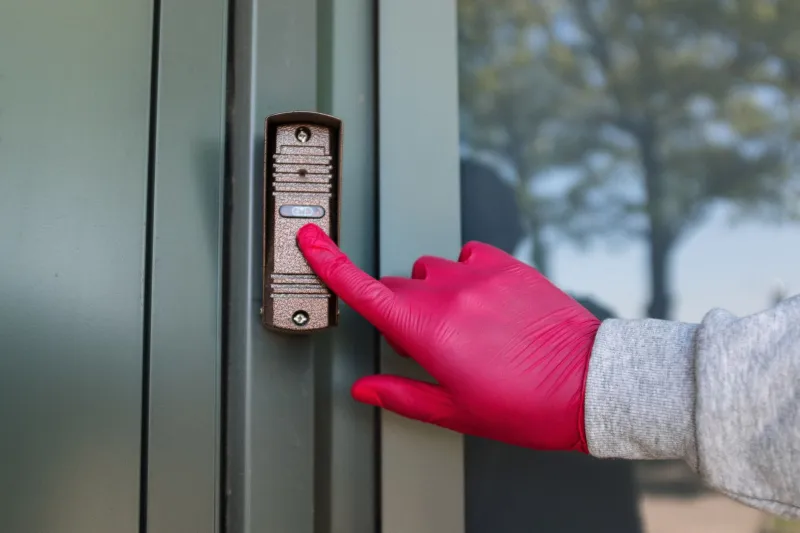
There was a time when the most dramatic thing that could happen on a British doorstep was a neighbour returning a ladder two years late. Now, thanks to the humble video doorbell, the front path has become a rolling news channel with a cast of thousands, a shaky plot and absolutely no duty of care towards its stars.
You know the genre. A clip lands in the family group chat at 7:42am: a courier pirouettes over a puddle, a fox makes off with a single trainer, or a bin lorry pauses for eleven minutes while two men in high-vis debate the correct way to stack a wheelie bin. It is not television, exactly. It is something stranger — accidental broadcasting, filmed by a lens the size of a 50p piece and narrated by whoever gets to the kettle first.
The new suburban serial
Doorbell cameras were sold as security. In practice, they have become something closer to a neighbourhood CCTV soap opera, complete with recurring characters and cliffhangers. The cast is reliably British: the courier who leaves a parcel behind the plant pot rather than in it; the dog walker who lets their spaniel water the hydrangeas; the delivery driver who rings the bell, waits four seconds, and then writes “no answer” with the finality of a judge passing sentence.
Then there is the wildlife. Foxes have become the breakout stars of the genre, largely because they move like they have been directed by someone with a grudge against the concept of dignity. A fox at 2:14am, sniffing a recycling box with the intensity of a detective, can rack up more views in a street WhatsApp group than a minor celebrity’s wedding video.
And let us not forget the bin-day standoff. There is a particular kind of British tension that only exists when two households disagree about whose bin is technically “on the boundary”. A doorbell camera captures it all: the slow approach, the pointed pause, the symbolic half-inch shuffle of a wheelie bin. No words are exchanged. None are needed. The footage does the talking.
The WhatsApp group is the newsroom
The real engine of this new genre is not the camera. It is the group chat. A clip rarely stays in one household. It is forwarded to the street group, then to the wider estate group, then to a cousin in Leeds who has never met anyone involved but still has opinions about the courier’s parking.
Within minutes, the footage has been analysed like a Zapruder film. Someone will know the courier’s employer. Someone else will recognise the fox. A third person will point out that the bin lorry was actually two minutes early, which explains everything and nothing. The tone is part crime reconstruction, part village gossip, part amateur nature documentary.
This is where doorbell footage becomes local celebrity. The fox becomes “the fox”. The courier becomes “that one who always leaves things on the step”. A neighbour who once reversed into a hedge at a Christmas party becomes a recurring character in a saga nobody planned. The camera does not create the drama. It just gives it a time stamp.
Why 2026 is the year of the front-path broadcast
The technology has become cheap and cheerful. A decent video doorbell now costs less than a round of Sunday lunches, and it arrives with an app that pings you when a leaf moves. Add in the fact that more of us are at home at odd hours, and the result is a nation of accidental producers.
There is also the delivery economy. Britain’s front doors are now a logistics hub for everything from cat food to flat-pack furniture, and every delivery is a small piece of theatre. Will the parcel go in the safe place? Will the driver actually read the instructions? Will the fox get there first? These are the questions that keep a street glued to its phones.
But the deeper appeal is simpler. Doorbell footage is the modern equivalent of twitching a net curtain. It is neighbourly curiosity with a lens attached, and it lets us feel connected without actually having to knock on anyone’s door.
The unwritten rules of filming your front path
Of course, there are etiquette questions. Plenty of them. The unwritten rules are still being written, mostly in passive-aggressive messages and the occasional pointed comment over the fence.
Rule one: do not post a clip that shames a neighbour unless you are prepared for the fact that they will see it. They will. Someone always forwards it back.
Rule two: keep the audio off when the clip involves anyone having a bad day. A doorbell mic can pick up a whispered “for goodness sake” from three feet away, and nobody needs that in the group chat.
Rule three: if the clip is just a fox, a cat, or the wind moving a hanging basket, label it clearly. There is a special place in the local WhatsApp group for people who post a 47-second video of absolutely nothing and call it “interesting”.
Rule four: remember that the pavement is public, but the person on it is not your content. A courier is not a character in your show. They are a person trying to earn a living while being filmed by a plastic button.
The doorstep as a stage
What makes doorbell drama so oddly compelling is that it is happening to us. The postman is not a stranger; he is the man who once saw you in your dressing gown at 6:45am. The fox is not wildlife; it is the reason your recycling bin is now a crime scene. The footage turns the front path into a stage, and everyone on it into a supporting actor.
In 2026, Britain’s most-watched soap opera is not on BBC One or ITV. It is on a phone, in a group chat, at 7:42am, and it stars a courier, a bin lorry and a fox with a taste for trainers. There are no scripts, no ad breaks and no ending. Just the next ping, and the next small drama on the doorstep.