Cast On, Show Off: The Quiet Stitch Wars Behind Britain’s Postbox Toppers
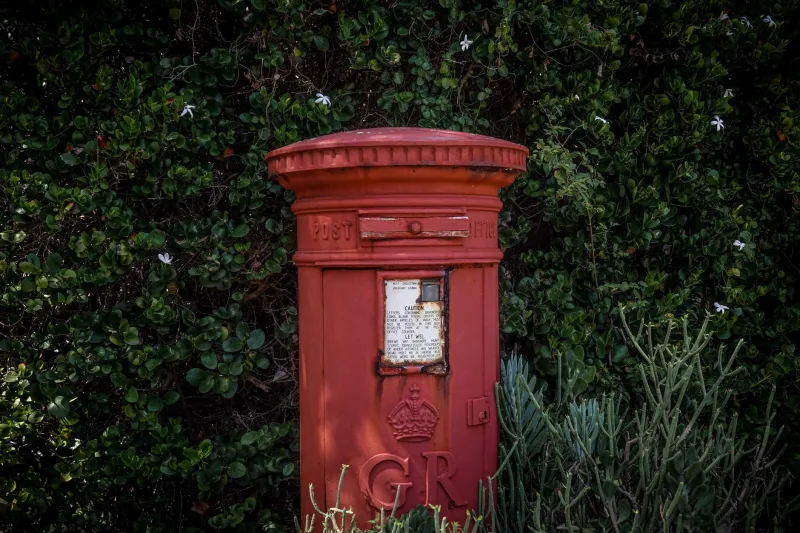
In a country that has made an art form of the queue, the polite complaint and the strategically placed traffic cone, there is something deeply fitting about the postbox topper. A pillar box, that most utilitarian piece of street furniture, is suddenly wearing a penguin. Or a poppy. Or a full-size knitted postman with a wonky moustache. And nobody, officially, knows who put it there.
These woolly crowns have become a familiar sight across Britain. They appear overnight, strapped to postboxes with cable ties and an air of quiet defiance. They mark Remembrance, Christmas, Easter, the coronation, a village fete, or simply a Tuesday when someone finished a pattern early. In 2026, the topper is no longer a novelty. It is a civic institution, albeit one held together by acrylic yarn and plausible deniability.
The overnight installation
The first rule of postbox toppers is that installation is a stealth operation. The second rule is that everyone knows about it anyway. Somewhere between 11pm and 6am, a figure in a waterproof coat will be seen wrestling a knitted holly wreath onto a box outside the Co-op. By breakfast, the local Facebook group has three posts about it, one of which says ‘Who did this?’ and another which says ‘Lovely, isn’t it?’ The third will be a complaint about parking.
The mystery is part of the magic. In some towns, the identity of the postbox knitter is an open secret, discussed in the same hushed tones as the vicar’s wifi password. In others, it is a genuine enigma. One woman in Cumbria has reportedly been topping the same box for years without ever being caught, though her neighbours have noticed that her garden shed has an unusual amount of wool and a suspiciously good supply of cable ties.
What unites them is craftsmanship. These are not hastily wrapped scarves. A decent topper involves weeks of work: a knitted robin with individual tail feathers, a snowman with a carrot nose stiffened by floristry wire, a Remembrance display with poppies arranged just so. The best ones look as if they have been designed by a committee of very patient grandparents and then approved by a focus group of small children.
The unwritten rulebook
For something so cheerful, the postbox topper scene has a surprisingly strict code. It is never written down, but everyone seems to know it. The topper must never cover the posting slot, the collection times or the royal cipher. It must be weatherproof, or at least weather-tolerant. It should be removed once the occasion has passed, though ‘passed’ is a flexible term that can stretch from Boxing Day to Pancake Tuesday.
There is also a firm understanding that toppers should not be political. A knitted Easter chick is fine. A knitted Easter chick holding a protest placard about bin collections is not. The tone should be gentle, seasonal and broadly undeniable. This is public art with a cup of tea and a digestive biscuit, not a guerrilla campaign.
And then there is the question of scale. A single poppy on a postbox is respectful. A full knitted cenotaph with a working poppy appeal tin is a statement. Somewhere between the two lies the sweet spot that most villages aim for: charming, thoughtful and just slightly better than the next village along.
A very British rivalry
This is where the quiet stitch wars begin. Postbox toppers are, at their heart, a form of civic one-upmanship conducted in wool. No one would ever admit to competing. That would be vulgar. But when the neighbouring village unveils a knitted snowman, your village does not want to be the place with the slightly sad felt robin. It wants to be the place with the snowman, a snowdog and a miniature knitted postbox beside the real one.
The rivalry is rarely hostile. It is more of a low-level hum of topper envy. A knitted nativity with a real straw roof will be admired in public and analysed in private. Someone will remark, kindly, that it must have taken ages. Someone else will note that the donkey’s legs are a bit thin. The following year, your village will produce a nativity with a donkey whose legs are not thin at all, and a small knitted star that lights up. Nobody will mention the word ‘escalation’. Nobody needs to.
In towns, the competition is less about villages and more about streets. A postbox outside a bakery might get a knitted gingerbread man. A postbox near a school might get a knitted pencil case. A postbox outside a pub might get a knitted pint, which will remain in place until someone’s auntie points out that it looks a bit like a pint of mild and the landlord takes it personally.
Who is behind the wool?
The anonymity is key. Postbox toppers are a form of generosity that refuses credit. They are made by people who would rather you admire the penguin than the person who spent three weeks knitting it. Some are lone crafters. Some are covert groups: a WI branch, a church circle, a cluster of neighbours who meet on Thursdays and refer to themselves, only half-jokingly, as the village yarn underground.
The lockdowns of 2020 gave the habit a boost, as bored hands and closed shops pushed a lot of people towards wool. But the roots go deeper. Britain has a long history of decorating public spaces with knitted things, from yarn-bombed railings to tiny hats on statues. The postbox is simply the perfect canvas: vertical, visible and just municipal enough to make a woolly hat feel faintly rebellious.
Royal Mail has generally taken a lenient view, provided the post still goes in and the box remains recognisable. Councils have mostly learned to leave well alone. There is no official budget line for knitted penguins, and no one wants to be the officer who orders one removed.
The woolly crown
In the end, the postbox topper is a small, daft, thoroughly British pleasure. It asks nothing of you except that you notice it. It turns a trip to post a birthday card into a moment of mild wonder. It gives a village something to talk about that is not parking, potholes or the price of a pint. And it proves, once again, that the best public art is often the kind that appears overnight, smells faintly of damp wool and refuses to explain itself.
So next time you see a postbox wearing a scarf, a poppy or a full knitted crib scene, take a moment. Somewhere, a pair of hands has been busy. Somewhere, a cable tie has been tightened. And somewhere, a neighbouring village is already planning its response.