Traffic Island Idyll: Britain’s Roundabouts Are the New Village Greens (and the New Battlefields)
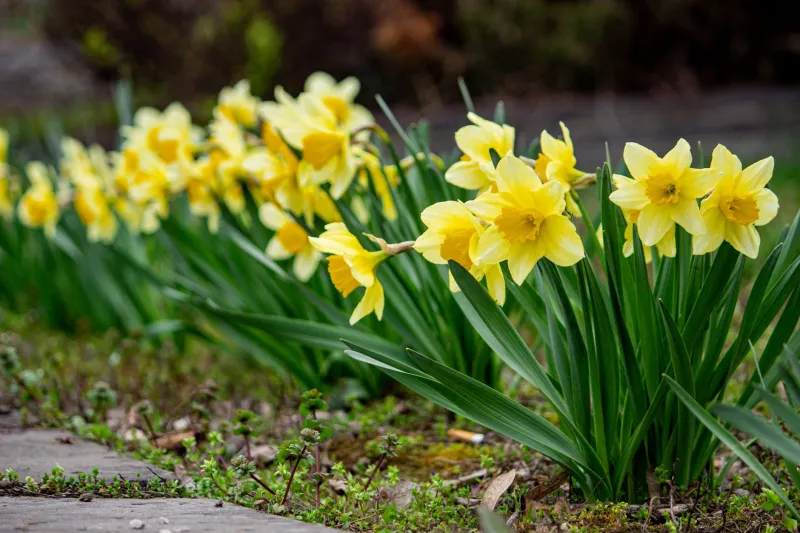
There is a particular kind of British pride that expresses itself in a ring of daffodils surrounded by three lanes of traffic. You have seen it. Maybe you have slowed down for it, muttered something approving about the council, and then immediately forgotten it. But somebody has not forgotten. Somebody planted it. Somebody, quite possibly, is still arguing about it.
Britain’s roundabouts are having a moment. Not because the traffic has improved — it has not — but because the soil in the middle of them has become a small, strange stage for civic identity. In 2026, with council budgets stretched and grounds-maintenance teams thinner than ever, the roundabout is where you can watch a town decide what it wants to look like. It is also where you can watch it fall out with itself over marigolds.
The Daffodil Diplomats
For decades, the roundabout has been the local authority’s cheapest shop window. A bed of tulips here, a geometric arrangement of begonias there, a spot of municipal bedding that says: we care, at least between April and September. These are the daffodil diplomats — the polite, council-planted front line of civic pride.
In places like Harrogate, Colchester and any number of market towns with a bypass and a sense of self, roundabout planting has long been taken seriously. Not quite Chelsea Flower Show serious, but close. There are colour schemes. There are complaints when the colour scheme changes. There is a specific type of person who will phone the council about a shabby island as if reporting a crime.
Come 2026, that phone call is more complicated. Many councils have cut back on seasonal bedding, citing costs, carbon and the fact that you cannot run a library on petunias. Some have replaced annual displays with perennial meadows, which is both cheaper and more ecologically sensible — and also, to a certain type of resident, a visible sign that standards have slipped. A wildflower verge is a habitat. A wildflower roundabout is, to the wrong eyes, a mess.
Midnight on the Island
Then there are the guerrilla gardeners. You do not hear them so much as notice their work: a sudden clump of lavender on a traffic island that was previously just a dumping ground for crisp packets and regret. Seed bombs lobbed over a hedge at dusk. A covert row of sunflowers appearing in a place where no council employee has been seen since the Queen’s Silver Jubilee.
Guerrilla gardening has a long, slightly romantic history in Britain, but the roundabout is its perfect canvas. It is public, visible and finite. You can make a difference in twenty minutes with a trowel and a bag of bulbs. You can also make a point. Some midnight sowers are simply keen gardeners who cannot bear to see bare earth. Others are making a quiet argument about biodiversity, neglect or the right to shape a shared space.
Councils tend to respond with a mixture of gratitude and anxiety. Gratitude because free labour is free labour. Anxiety because of liability, sightlines and the fact that someone has planted a small oak tree where the highways team needs to put a sign. The classic outcome is a passive-aggressive note on a lamp post: whoever planted the marigolds, please contact the office. It is not quite a crime wave. It is a tulip wave.
Memorials and Molehills
Roundabouts also carry grief. There are few places more public and more awkward for a memorial. A small cross, a bunch of flowers, a football shirt tied to a railing — these appear on traffic islands after accidents, and they stay. They turn a piece of engineering into a place with a name and a story.
That can sit uneasily alongside the practical business of keeping a junction safe. Volunteers who look after a roundabout often find themselves tending to more than plants. They straighten the flowers. They replace a faded ribbon. They notice when a wreath has blown into the carriageway. The roundabout becomes a tiny, unsung civic shrine, maintained by people who never asked for the job.
The Weeding Wars
If there is one thing a British volunteer cannot resist, it is a clear definition of a weed. One person’s wildflower meadow is another person’s eyesore. One volunteer’s tidy-up is another’s act of ecological vandalism. On roundabouts, these arguments play out in miniature and with surprising heat.
A council may designate a no-mow zone for pollinators. A neighbour may decide it looks scruffy and cut it. A guerrilla gardener may scatter poppy seeds. A highways contractor may strim the lot because a sightline needs checking. Everyone is acting in good faith. Everyone is furious.
The weeding dispute is a classic of the genre: notes left under a rock, stern words at the parish council, a Facebook group that splits into factions. It is not really about the weeds. It is about who gets to decide what a place looks like. A roundabout is small enough to be managed by one determined person, and that is exactly why it attracts them.
Council Budgets and the Trowel Economy
In 2026, the volunteer roundabout is going mainstream. Adopt-a-roundabout schemes, friends-of groups and informal rota systems have sprung up as councils hand over the watering can. There are risk assessments, hi-vis vests and insurance forms. There is also a quiet sense of pride: this is a patch of Britain you can actually finish.
The arrangement can be beautiful. A local nursery donates surplus plants. A retired gardener brings a flask and a plan. A school adopts an island and paints a sign. The roundabout becomes a shared project, a conversation starter, a place to put the energy that used to go into the village show.
It can also be a headache. Volunteers burn out. Councils worry about safety. One person’s generous planting blocks a driver’s view. But the impulse is hard to argue with. When public money is tight, people pick up a trowel. The roundabout is where that instinct becomes visible.
Why a Traffic Island Gets Under the Skin
So why do we care? Because a roundabout is a rare thing: a piece of public space that is entirely useless for anything except looking at. You cannot build on it. You cannot park on it. You cannot really walk on it, unless you have a death wish and a high-vis jacket. It exists to be seen, briefly, from a car. And yet people love them, fight over them and plant them with astonishing devotion.
Maybe it is the scale. A roundabout is small enough to feel like yours and public enough to matter. Maybe it is the visibility — a daily audience of thousands who will never know your name. Or maybe it is simply that in a country where it sometimes feels like everything is being sold, built over or left to decline, a ring of soil in the middle of a junction is still up for grabs.
Round and round we go. But look closely at the island as you pass. Someone has been there. Someone has made a decision. And someone, somewhere, is probably still annoyed about the marigolds.