The Star Allowance: Britain’s Christmas Tree Height Rows Are Now a Civic Sport
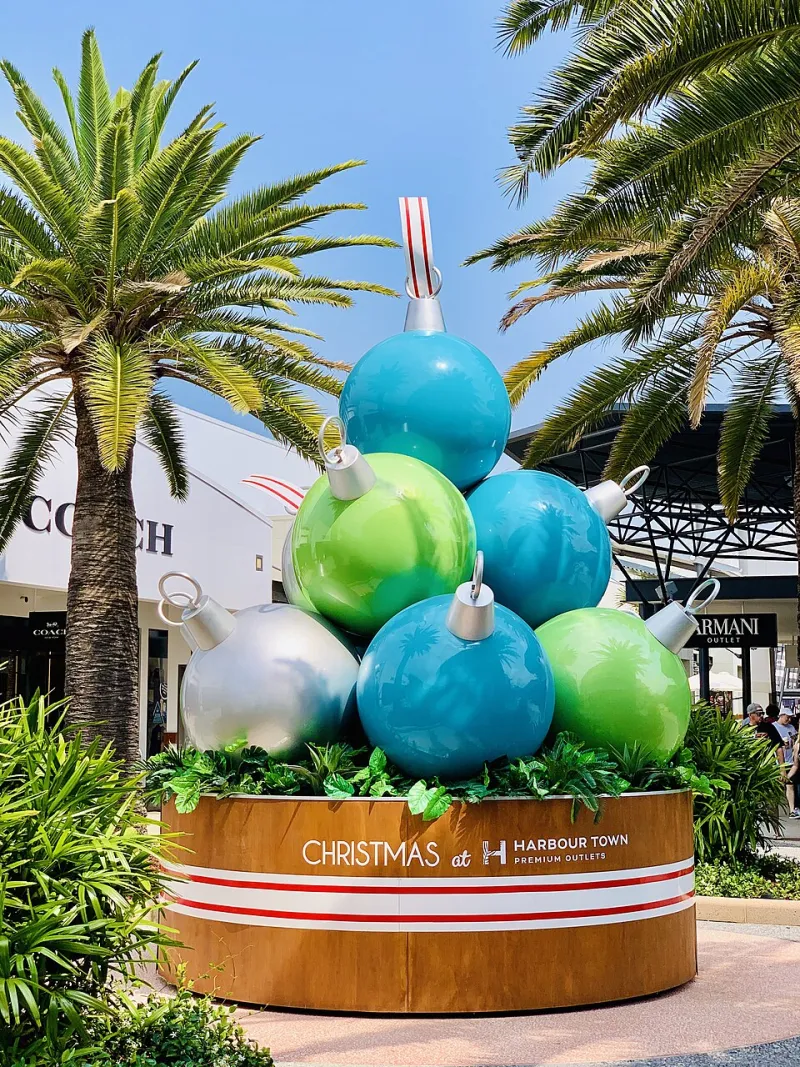
Photo: Kgbo, CC BY-SA 4.0, via Wikimedia Commons
There is a moment each November when a council worker in a high-vis jacket tightens the last guy rope, steps back, and a town holds its breath. Not at the lights. Not at the choir. At the tree. Specifically, at its height. Because somewhere across the county, a rival town has already posted a photograph with a caption that begins: ours is taller than yours.
The annual town-centre Christmas tree unveiling has quietly become less a lighting ceremony and more a public weighing-in, minus the scales and with considerably more spruce. A tree is installed, a ribbon is cut, a local radio presenter says something about festive cheer, and within twenty minutes someone has produced a tape measure. Or, more likely, an app that claims to measure things and does not.
The unveiling is only half the event
Officially, councils tend to describe their trees in the language of estate agents. The tree is approximately thirty feet. Approximately is doing a lot of heavy lifting in that sentence. Approximately can mean twenty-eight feet on a good day, twenty-six feet when measured from the pavement by a man called Dave, and thirty-two feet if you include the wooden base, the star, and the bit of tinsel that flapped loose in the wind.
This is where the row starts. Not a blazing row, usually. More a low-level civic grumble that runs through December like a dodgy fairy-light circuit. One town announces its tree is the tallest in the region. Another town points out that its tree is technically taller, but was measured from the bottom of the planter. A third town says it does not care about height, which everyone knows means it cares about height very much indeed.
Facebook: the people’s surveyor
The local Facebook group is the unofficial adjudicator. Within an hour of the unveiling, somebody has posted a photograph of the tree next to a parked van for scale. Somebody else has drawn red lines across the image. A third person has commented that the tree looks smaller than last year, despite the council insisting it is the same size, if not slightly fuller. A fourth person has asked why the fairy is missing.
The missing fairy is its own subplot. Every town seems to have a tree-topper that either did not arrive, blew off in a gust, or is being repaired after an incident in the storage unit. The fairy becomes a political football. Was it removed for health and safety? Was it stolen? Is it being held hostage by the contractor? The council says it will be back by the weekend. The weekend comes. The fairy does not. A star appears instead. The star is described as temporary. The star is still there in January.
The star allowance
And so we arrive at the phrase that has become the mayoral defence of choice: technically, it is thirty feet if you count the star. This is the Christmas tree equivalent of excluding fees, or measuring a room from the skirting board. It is not necessarily dishonest. It is creative. It invites the public to consider where a tree ends and its decoration begins.
Once you count the star, where do you stop? The angel? The plug? The plastic reindeer at the base? The inflatable snowman that someone tied to the railings without permission? The question is philosophical, and the answer depends on whether your town has a taller tree than the next one. If it does, the star counts. If it does not, the star is a distraction from the real issue, which is that the tree is clearly four feet shorter than the one in the neighbouring town.
Rivalry, but mostly pantomime
The rivalry is rarely nasty. It is pantomime. A bit of booing, a bit of pointing, a great deal of pretending not to care. Towns compare species, too. A real Norwegian spruce is seen as the gold standard. A reused artificial tree is viewed with suspicion, unless it is a very good artificial tree and the council has spent the money on lights instead. That is a respectable defence. It suggests priorities. It suggests that the town is not shallow. It suggests that the town would have bought a taller tree if it had wanted to, which it did not, because it is focused on the important things.
High streets have had a tough time of it. A Christmas tree is free to visit, easy to photograph, and reliably popular with children and dogs. It gives a town centre a focal point in the darkest part of the year. In a season of potholes, bin collections and confusing parking apps, the height of the tree is one of the few things a council can actually measure and claim as a win. Small wonder that mayors take it personally.
The Saodin guide to measuring a town Christmas tree
If we are going to argue about this, we should at least argue properly. The tree should be measured from ground level to the highest point of the tree itself. The star may be counted separately, in the same way that a hat is not part of a person’s height. A photograph taken from a moving bus is not evidence. A drone is not evidence. A laser app on a phone is not evidence, especially if the phone is being held by someone wearing gloves and standing on a slight slope.
One tape measure. One witness. No Photoshopping. The fairy is to be discussed after the official height has been agreed, not before. And under no circumstances should anyone compare the tree to the one in the next town unless they are prepared to be gracious in victory and magnanimous in defeat.
They will not be. That is the point. The tree goes up, the tape comes out, the comments begin, and somewhere a mayor says the words thirty feet if you count the star. It is a gentle winter sport, played on pavements and in Facebook threads. The tree will be there. Someone will say it is smaller. Someone will defend it. The fairy will be missing. Merry Christmas.