The Six-Foot Empire: Beach Huts, Paint Charts and the Longest Waiting List by the Sea
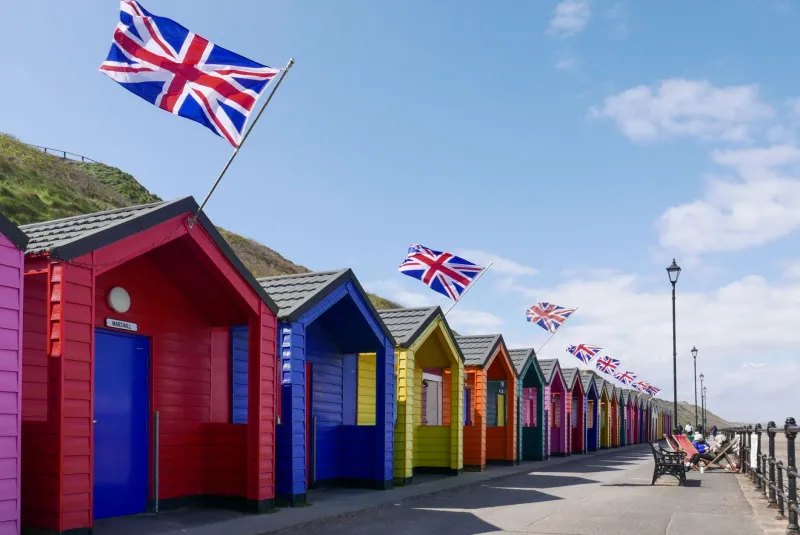
Beach huts look like the least complicated thing on the coast. A box of timber, a kettle, a folding chair, perhaps a jam jar of wildflowers and a noticeboard with a passive-aggressive reminder about bins. Then you scratch the paint and find the politics underneath.
Across the British coastline, from Whitstable to Southwold, Mudeford to Wells-next-the-Sea, these little painted cabins have become something stranger than seaside furniture. They are tiny second homes, inherited heirlooms, status symbols and the subject of feuds so precise they could be settled with a colour chart and a strongly worded letter to the parish council.
The waiting list is the real seafront attraction
Forget the ice cream van. In some coastal towns, the most competitive queue is the one for a beach hut. Councils and private associations maintain lists that can stretch for years, sometimes decades. In the most desirable spots, a name may be added to a waiting list so long that the person who put it there has since moved inland, had children, and begun wondering whether the hut will arrive before retirement.
There are stories of parents joining lists for toddlers, of grandparents bequeathing not just the hut but the place in the queue, and of hopeful applicants ringing the office each spring to ask, with studied casualness, whether anything has ‘come up’. The answer is usually no. The subtext is usually: please stop ringing.
The economics are peculiar. A hut with no running water, no toilet and a strict ban on overnight sleeping can change hands for sums that would buy a respectable flat elsewhere. Annual fees, insurance and maintenance add up. Yet the maths is not the point. The point is the key. The point is the little strip of decking. The point is being able to say, without saying it, that you have a place by the sea.
A shed with a postcode and a colour clause
Beach huts are not anarchic. They are governed. Some sites issue a palette; others rely on covenants, licence conditions and the collective stare of neighbours. A hut may be allowed to be ‘any colour’ in theory, while the practical reality is a very specific shade of sage, sky blue or mustard that was agreed at a meeting nobody remembers attending.
This is where the paint wars begin. One owner freshens up a door in a cheerful coral. Another notices. Within days, there is a query about ‘consistency of appearance’. Within weeks, there is a note on the noticeboard. Within a month, there is a small delegation standing at the end of the row, pretending to admire the view while examining a paint sample.
It sounds petty. It is petty. But it is also about something larger: the belief that a beach hut is not merely private property but part of a public face. A scruffy hut is a shrug at the whole seafront. A beautifully maintained hut is a contribution to civic life. A hut painted the wrong colour is, depending on your point of view, either a bold act of individuality or a small declaration of war.
Windbreaks, deckchairs and the diplomacy of six feet
The unwritten etiquette is where beach hut life becomes genuinely intricate. The hut itself may be yours, but the patch of beach in front of it is contested territory. Windbreaks are not merely windbreaks; they are border fences. Deckchairs are not merely seating; they are claims to territory. A parasol angled just so can block a neighbour’s afternoon sun and start a silent campaign lasting until September.
There is an understood buffer zone. Nobody quite agrees on its size, but everyone knows when it has been breached. A family arriving with a vast cool box, a radio and a small encampment of folding furniture may be greeted with a smile that does not reach the eyes. The smile says: welcome to the beach. The eyes say: that is my view.
Then there is the matter of the hut next door. Some neighbours become lifelong friends over shared kettles and borrowed bottle openers. Others communicate entirely through notes about bin bags. The most successful beach hut owners develop a diplomatic manner worthy of a small nation state: friendly, firm, and always in possession of a spare windbreak peg.
The economics of a very small second home
Beach huts have become a curious investment class. They are not quite property, not quite caravans, and not quite club membership, but they combine elements of all three. Buyers pay for the structure, the licence, the location and the fantasy. Sellers know this. So do the estate agents who list them with the same straight face they might use for a cottage with a garden and a parking space.
Running costs are real. There is the annual fee to the council or association, insurance, repairs, paint, locks, and the constant battle against salt and damp. Some owners spend more on maintenance than they would on a week in a hotel. But a hotel does not let you leave your deckchair out, argue about the colour of your door, or arrive on a grey Tuesday in November just to make a cup of tea and stare at the sea.
That last point matters. The beach hut is not really about summer. It is about access. It is a promise that the coast is still yours, even when the wind is horizontal and the promenade is empty.
Inherited timber and the quiet status symbol
Many huts are passed down through families, not always with the full legal smoothness that outsiders imagine. A hut may be ‘in the family’ for decades, its name painted on a plank, its kettle inherited from a grandmother, its cupboard containing a fossilised packet of custard creams. The emotional value is enormous. The resale value can be equally startling.
This is the quiet status symbol of the British seaside. Nobody boasts about a beach hut in the way they might boast about a car. They do something far more British: they mention it casually, in passing, and then wait to see if you ask a follow-up question. If you do, you will be told about the waiting list, the colour rules, the neighbour who is lovely but peculiar about windbreaks, and the time the seagull got into the cupboard.
At Saodin, we are fond of these small theatres of British life. The beach hut is a shed, a hobby, a money pit and a community all at once. It is also a reminder that the British will tolerate almost anything as long as there is a rota, a set of unwritten rules and a decent chance of a cup of tea.
So if you find yourself walking past a row of painted cabins this winter, look closely. The doors are shut. The deckchairs are stacked. But the politics are still there, drying slowly under a coat of next summer’s approved colour.