Honesty, Eggs and a Tupperware Tin: The Quiet Theatre of Britain’s Roadside Stalls
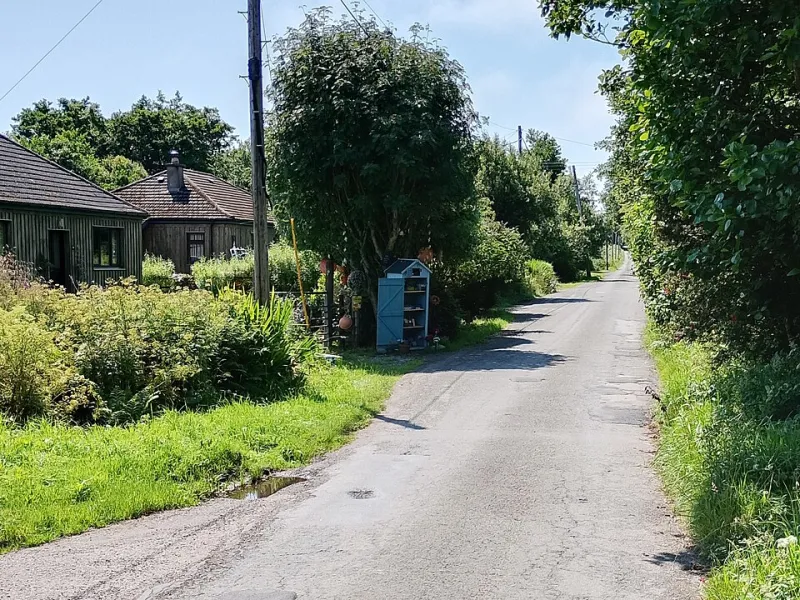
Photo: Jim Smillie , CC BY-SA 2.0, via Wikimedia Commons
There is a particular kind of British shop that has no door, no till and no queue. It opens at dawn, closes when the light goes, and operates on the assumption that you are probably all right. You will find it on a verge outside a village, beside a farm gate, or at the end of a lane where the satnav gives up. It sells eggs, courgettes, jars of jam and the occasional bag of windfall apples. Payment goes into a tin. The tin is often a Tupperware tub with a slot cut into the lid.
This is the roadside honesty stall, and it is one of the quietest bits of theatre in the country. The props are humble. The stakes are surprisingly high.
The stall that opens itself
On a damp November morning, a stall outside a village in the Cotswolds is doing brisk business with nobody present. A hand-painted board lists eggs at £2.50 a half-dozen, marmalade at £3, and a pleasingly vague category called ‘veg’ at 50p a piece. There is a plastic tub for money, a notebook for messages, and a jam jar weighted with a stone in case the wind gets ideas. A dog in a nearby garden is the only security.
These stalls are not a new invention. They are the rural equivalent of leaving a key under a flowerpot, except the flowerpot is a picnic table and the key is a cash economy. What has changed is how many people now seek them out. A drive in the country is no longer just a drive; it is an opportunity to buy a suspiciously large marrow from a stranger and feel virtuous about it.
A till made of trust
The etiquette is unwritten but ferociously understood. You pay what the sign says. You take the change you are owed, not the change you fancy. You do not rummage through the eggs to find the six largest. If you have no coins, you leave a note or promise to return, and the strange thing is that most people do. The stall operates on a kind of low-level social credit system: not enforced by cameras, but by the fear of being known as the person who did not pay for the rhubarb.
There is also a hierarchy of produce. Eggs are the anchor. Jam and chutney are the middle class. Surplus courgettes are the comedy. And then there are the wildcards: a bag of damsons, a punnet of raspberries, a single enormous cauliflower that looks like it has seen things. The best stalls have a hand-written sign explaining that the tomatoes are ‘ugly but tasty’, which is both a disclaimer and a boast.
The characters behind the chutney
Behind every box is a person with a glut. Often it is a retired grower with more runner beans than friends. Sometimes it is a child earning pocket money from eggs, with a pricing policy that swings between ruthless and confused. Occasionally it is a smallholder who has turned a surplus into a micro-brand, complete with labels printed at home and a Facebook page updated twice a year.
They are not trying to build an empire. They are trying to avoid wasting food, make a few quid, and have a reason to chat to whoever stops. The stall is a noticeboard as much as a shop. Notes appear: ‘Back next week’, ‘Honk if you want gooseberries’, ‘Whoever left the £5, thank you, but you overpaid’. It is local news in felt-tip.
Weatherproofing and the art of the weighted jar
British weather makes honesty boxes a design challenge. The money tin must be heavy enough not to blow away, but light enough to be opened by a cold hand. Jars need a dry shelf. Eggs need shade. Signs need laminating, or at least a plastic wallet and a prayer. The most sophisticated operations use a biscuit tin inside a plastic crate, with a brick on top and a spare carrier bag hanging from a nail. It is engineering by instinct.
Then there is the honesty-box aesthetic: handwritten prices, mismatched jam jars, a small pot of change that looks like it has been inherited. Some stalls now accept bank transfers, which feels like a betrayal of the form but is probably sensible. The tin remains, though, because the tin is the point.
When the jar comes up short
Not everyone plays fair. Every stallholder has a story about the time the money did not add up, or the best tomatoes vanished without payment. The response is rarely a confrontation. It is a sign. A pointed note. A gentle escalation in language, from ‘Please pay for what you take’ to ‘We know who you are’ to the devastating ‘One of you knows’.
The small dramas are part of the appeal. A missing £1 is not a crime wave; it is a breach of a contract that nobody signed. And the fact that the stalls keep going — that people keep leaving eggs and jam and trust out in the drizzle — says something quietly optimistic about the country. It is a shop that assumes the best and occasionally gets the worst, and still opens the next morning.
The quiet economy
None of this is going to rival the supermarket. The prices are low, the stock is unpredictable, and the opening hours are whatever the weather decides. But the roadside honesty stall does something that a checkout cannot. It turns a purchase into a small exchange of faith. You take the eggs; you leave the coins; you both carry on.
So next time you see a hand-painted sign at the edge of a field, slow down. There may be a fifty-pence courgette with your name on it. There may be a jar of chutney with a label that says ‘hot’. And there will almost certainly be a Tupperware tin, waiting patiently, believing in you.