Barrels, Bounds and a Mayor on the Scales: Britain’s Strangest Ancient Customs Are Still Packing Them In
Britain has a genius for keeping alive things that sound like they were invented by a committee of mildly bored medieval villagers. A barrel gets kicked through a stream. A mayor gets weighed in public. Wells get dressed in petals. Parish boundaries get beaten with sticks. None of it makes obvious sense, and all of it is still happening in 2026.
These aren’t museum pieces or weekend re-enactments. They are living events with mud, cake, local grudges and a rota. If you turn up expecting a polite heritage demonstration, you may leave with a bruised shin and a new respect for rural organisation.
Hallaton: bottle-kicking, hare pie and a very serious scrum
Easter Monday in Hallaton, Leicestershire, is not a quiet affair. The village takes on neighbouring Medbourne in the bottle-kicking match, a contest that looks less like a sport and more like a well-organised civil disturbance. The “bottles” are small wooden barrels, and the aim is to get one across a boundary stream. The rest is a scrum of bodies, mud and shouting.
The day begins with a hare pie scramble, which sounds charming until you remember that crowds and flying food have a long and chaotic history. Then the bottles come out, and the local rivalry gets its annual airing. Nobody is playing for a trophy in the modern sense. They are playing for the village, which is a much older and more stubborn kind of prize.
For spectators, the practical advice is simple: wear boots, keep back, and don’t assume you can wander into the middle for a better photo. The bottle-kicking is not a spectator sport in the way football is. It is a participant sport with spectators attached, and the participants are not always looking where they are going.
High Wycombe: the mayor gets put on the scales
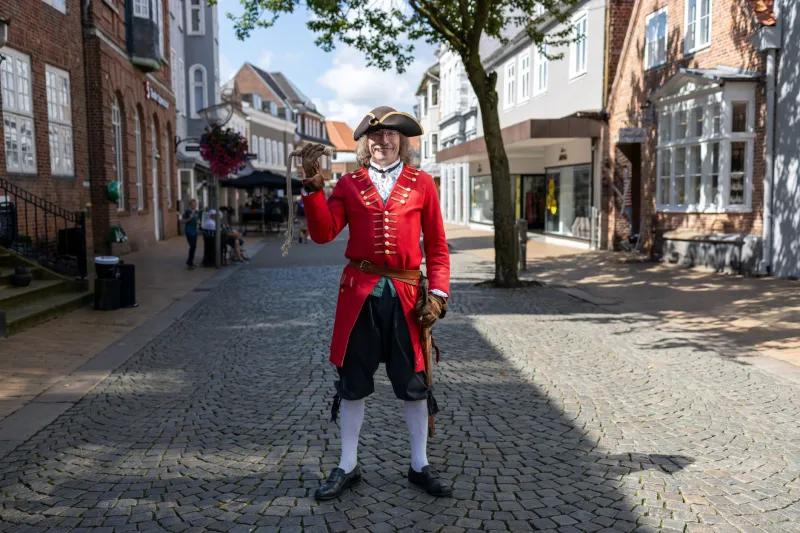
In High Wycombe, the civic calendar includes a tradition that would cause a minor scandal almost anywhere else: the mayor is publicly weighed. The ceremony, held at the Guildhall, is part history lesson and part local roast. The mayor steps onto the scales, the crowd watches, and the result is announced with the sort of glee usually reserved for a pub quiz tiebreak.
The custom is often traced back to medieval ideas about keeping civic officials honest, though these days it is more about continuity than catching anyone out. It gives the town a chance to gather, make a gentle joke at the mayor’s expense, and remind everyone that local government has a theatrical side. If you fancy watching, check the council’s civic listings rather than turning up on a random Tuesday with a deckchair.
Derbyshire: well dressing is art with petals and puddles
Across Derbyshire, summer brings well dressing: large pictures made from flower petals, seeds, moss, leaves and other natural bits, pressed into clay-covered boards and displayed near wells and springs. Villages such as Tissington, Youlgreave and Bakewell have their own styles and schedules. The results can be genuinely beautiful, and the process is gloriously labour-intensive.
The tradition is usually linked to thanksgiving for water, though its exact origins are pleasingly fuzzy. What matters locally is the team effort. There are frames to soak, petals to sort, designs to argue over and a deadline to meet. It is craft project, village quiz and mild group therapy rolled into one.
For visitors, well dressing season runs roughly from May to August. Pick a village, check the dates, and go early enough to see the dressing before the weather has its way with it. And do not touch the petals. Someone spent three evenings on that section.
Beating the bounds: walking the parish edge with sticks
Beating the bounds is exactly what it sounds like, only stranger. Parish boundaries are walked, markers are tapped with sticks, and in some places children are gently bumped against boundary stones to help them remember where the edge is. It traditionally happens around Rogationtide, and versions survive in various parts of the country.
It began as a practical way of teaching people the limits of the parish, back when maps were scarce and memory mattered. Now it is a walk with a purpose, a bit of local history and usually a pub at the end. Some events are short and sedate. Others are proper rambles through fields and lanes. If you join one, wear sensible shoes and do not complain about stiles.
Why they survive
These customs survive because they are useful. Not economically useful, necessarily, but socially useful. They give villages and towns a reason to gather, a story to tell and a role for people who like organising things. They are cheap, photogenic and slightly ridiculous, which is a strong combination in 2026.
There is also a quiet rebellion in doing something that cannot be downloaded. You cannot stream a bottle-kicking match and get the same effect. You cannot outsource a mayor’s weigh-in to a group chat. The physicality is the point. Mud, petals, sticks and scales are not bugs; they are the feature.
If you fancy a gawp
Check local dates first. These events are run by volunteers and parish committees, not by a central booking line. Wear boots. Bring cash for cake and raffle tickets. Do not call it a re-enactment unless you want a very patient explanation from a local. And if someone hands you a stick and points at a boundary stone, just go with it.