Cry Me a River: Bells, Bravado and the Delicate Ego of the British Town Crier
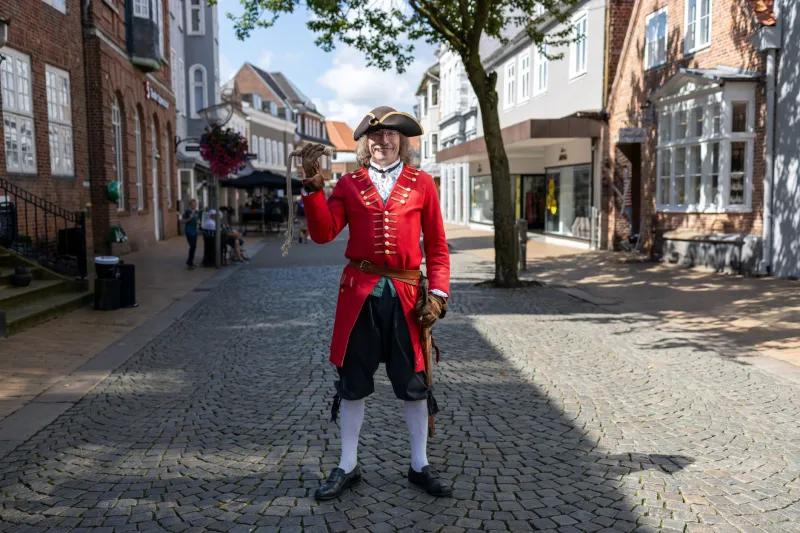
The first thing you notice is not the shouting. It is the polishing. A town crier’s bell is not a prop; it is a colleague, a weapon and, in some cases, a more popular member of the family. On a damp morning in a market square, a champion crier I shadowed for the day — let’s call him Gerald, because his bell is called Beryl and one of them has to be discreet — is buffing the thing with the concentration of a jeweller. ‘You can tell a lot about a crier by his bell,’ he says. ‘Mine has a clean tone and a nasty edge. Like a good fruit cake.’
The 6am Shine
Gerald does not warm up with scales. He warms up with weather warnings. He stands by a kettle, breathes from the diaphragm and practises the word ‘Oyez’ until it lands like a dropped paving slab and fades like a polite cough. ‘It’s not about being loud,’ he insists, before doing something extremely loud. ‘It’s about being loud in the right places.’
His kit is laid out like a small military operation: tricorn hat, embroidered coat, polished shoes, a spare pair of socks and a lozenge tin with the dignity of a family heirloom. The bell goes in its own case. The ego, he says, goes in the car.
Town crying has the odd quality of being both utterly public and faintly secretive. Every crier knows every other crier, or knows someone who has fallen out with them. They are civic volunteers, carnival attractions, charity fundraisers and, at championship time, competitors with the intense stare of people who have been judged on their diction since 1987.
A Sport of Loud Men and Louder Blazers
At a competition, the scene is part pageant, part village fete, part public-address system with a grievance. Bunting flaps. Spectators gather with folding chairs and thermos flasks. Criers arrive in robes of scarlet, green and blue, some with hats like upturned boats, others looking as if they have been sent by a very formal theatre company.
The judging is serious. Marks are given for clarity, volume, diction, content, costume and bearing. There is usually a set cry and a ‘home cry’ — the crier’s own piece, often a giddy blend of local history, charity plug and joke about parking. The best ones begin with three ‘Oyez’s, because tradition demands it and because a crier without repetition is just a man in a hat shouting about a raffle.
The word ‘Oyez’ comes from the old French for ‘hear ye’, which is a useful reminder that the whole enterprise is essentially about being heard. In practice, it is also about being heard over traffic, wind, a nearby busker and the ambush of a market awning. A crier learns to project from the chest, not the throat, and to shape consonants like a newsreader with a grudge.
The Art of Being Heard and Not Understood
The great paradox of modern town crying is that the louder it gets, the less anyone can make out. A crier can belt out a notice about a missing dog, a summer fete and the mayor’s charity skydive, and the crowd will applaud warmly without catching a single noun. This is not always a failure. Sometimes it is the point. The cry is a ritual, a warm blast of civic noise that says: something is happening, and someone has gone to the trouble of putting on a coat for it.
Gerald’s party trick is a cry about a market town’s annual cheese roll. It includes three local place names, one obscure saint and a punchline about a wheel of cheddar. He delivers it with such relish that a woman near me says, ‘I’ve no idea what he said, but I’d vote for him.’
Feuds in the Fold
For a tradition built on good cheer, the town crier world has a surprisingly robust supply of friction. There are rows about costume authenticity — is a lace cuff too much? Is a tabard cheating? There is bell envy, which is exactly what it sounds like. There are accusations of borrowed catchphrases, of starting too close to the judges, of using a ‘home cry’ that was allegedly poached from a crier in a neighbouring county.
Then there are the judging decisions. In any competitive craft, someone will always feel robbed. Town crying is no different, except that the disappointed party can express their feelings through a bell, a hat and a public address voice trained to carry across a car park. ‘It’s a small world,’ says Gerald, ‘with a very large echo.’
The 2026 season has been no exception. Between championship weekends, criers have been turning up at food festivals, charity runs, shop openings and Christmas light switch-ons — the last being the crier’s equivalent of a stadium tour. A well-timed ‘Oyez’ before a bulb countdown can make a damp high street feel briefly operatic.
Why It Refuses to Go Quiet
Historically, town criers were the local news service: proclamations, market rules, taxes, lost livestock and the occasional royal announcement. Literacy and newspapers should have finished them off. Instead, they survived by becoming something else — a piece of living theatre, a thread to the past and a reliable way to make a shopping centre feel important.
That is why the tradition keeps refusing to go quiet. It is silly, but it is not empty. It gives local pride a costume and a bell. It turns a noticeboard into an event. And it allows grown adults to stand in a square and shout ‘Oyez’ with total sincerity while a small dog barks at them.
At the end of the day, Gerald packs Beryl away with the care of a man putting a sleeping relative into a taxi. ‘Same time next week?’ I ask. He nods. ‘Same time, different hat. And if you print any of this, say my diction was excellent.’ It was. Mostly.