Marrows at Dawn: Feuds, Fenlands and the Fierce Etiquette of Britain’s Allotment Societies
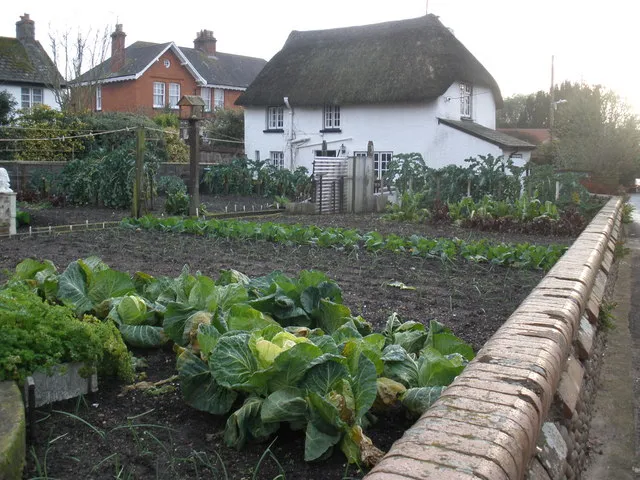
Photo: Roger Cornfoot, CC BY-SA 2.0, via Wikimedia Commons
On a grey Saturday in late September, in a village hall that smells of tea, damp coats and competing ambitions, a marrow is being weighed. The marrow is the size of a small dog and has been polished like a piece of furniture. A man called Ron is staring at the floor. A woman called Pam is pretending not to notice. Everyone else is pretending not to notice Ron and Pam pretending. This is not a scene from a gritty rural drama. It is an allotment society show, and the stakes are considerably higher than they look.
Britain’s allotments have a reputation for gentle pottering. The reality is more interesting. These scruffy patches of land — rented from councils, parishes or private landlords — are tiny republics with their own laws, hierarchies and grudges. In 2026, with waiting lists in some cities running to years, a plot is not just a hobby. It is a status symbol, a social club and, occasionally, a battlefield.
A Very British Kind of Warfare
Allotments were never meant to be fashionable. They grew out of 19th-century schemes to give labourers a bit of land and a bit of dignity. The Allotments Act 1908 gave local authorities duties around providing them; the Dig for Victory campaign of the Second World War turned them into a national necessity. The modern plot is a different beast: often a postcode lottery, sometimes a waiting list of a decade, always a small piece of land with a large personality.
Competition is built in. Village shows, society cups, inter-site leagues and the quiet prestige of a National Vegetable Society certificate all give growers something to aim at. The categories sound innocent: heaviest onion, longest bean, best three potatoes, finest marrow. The emotions are not. In the North East, leeks are grown with the seriousness of a minor religion. In the Midlands, marrows are polished, measured and discussed in hushed tones. In Yorkshire, onions can become a family legacy.
One Lincolnshire society reportedly introduced a rule that entries must be grown by the person entering them after a suspiciously perfect cucumber appeared in 2019. Another plot-holder in Bristol allegedly installed a motion-sensor light after a midnight raid on his prize pumpkins. The light did not catch the culprit, but it did annoy the neighbouring greenhouse. Anecdotes like these are passed around allotment fences like seed packets: partly true, partly improved in the retelling, entirely believable.
The Rules Are Unwritten, Until They Aren’t
Every allotment site has a rulebook, and every site has a set of rules that are not in the rulebook. The written ones cover rent, upkeep, bonfires and the acceptable height of a hedge. The unwritten ones cover everything else: do not pinch a neighbour’s rhubarb, do not hog the communal tap, do not let your weeds flower, and never comment on someone’s compost heap unless invited. Compost is personal.
Path etiquette matters more than outsiders might imagine. A tidy path is a public statement of competence. An overgrown path is a silent accusation. If you strim the edge of your plot, you are a good neighbour. If you strim the edge of someone else’s plot without asking, you are making a point. The committee is the closest thing to local government on site, and its annual general meeting can be tense. Rent rises, hedge disputes and the perennial question of whether the site needs a portaloo are all debated with the gravity of a parliamentary bill.
Then there is water. A shared tap in July is a lesson in human nature. Everyone needs it; nobody wants to be the person who fills forty watering cans while a queue forms. The polite solution is to water at dawn or dusk, when the queue is short and the light is kind. The impolite solution is to install a covert hose. The hose is the allotment equivalent of a smoke-filled back room.
Shed Envy and the Midnight Courgette
Sheds are not sheds. They are statements. A shed with a wood-burning stove, a radio and a kettle is a palace. A shed with a veranda is a provocation. A shed with a padlock, a security light and a sign saying ‘nothing of value is kept here’ is a confession that something of value is definitely kept there.
Shed envy leads to security upgrades: hasps, bolts, motion sensors, dummy sheds. One allotment in Leeds allegedly had a spate of break-ins that stopped only after a plot-holder left a radio tuned to a talk station inside his shed. The burglars may have been deterred by the lock. They may also have been deterred by the thought of two hours of phone-in debate. Midnight sabotage is rarely dramatic. It is usually petty: a moved hose, a vanished marrow, a gate left open, a single footprint in a seedbed. The worst feuds are conducted through passive-aggressive signage. ‘Please do not take our water.’ ‘This is not a public path.’ ‘All produce is for the plot-holder.’ The sign is the weapon; the silence is the follow-up.
Why We Still Dig
Despite the friction, demand is high. Allotments offer quiet, exercise, community and cheap vegetables. They also offer an acceptable outlet for competitiveness in a country that is often embarrassed by ambition. You can be ruthless about a leek and still be considered a nice person. You can hold a grudge about a stolen courgette for a decade and still be invited to the summer barbecue.
The feuds are real, but so is the cake stall. The same people who argue about water pressure will bring extra seedlings to a new plot-holder. The same committee that fines you for a bonfire will organise a whip-round when your shed blows down. The marrow competition is not really about the marrow. It is about recognition, a bit of banter and the pleasure of doing something well in a small, visible way.
So when the weighing is done and the rosettes are handed out, Ron and Pam will probably share a cup of tea. They may even congratulate each other. But next year, the leeks will be longer, the marrows will be heavier, and the shed will have a new lock. That is the allotment way.